Webflow Development Agency: Expert CMS & SEO Services
A SaaS team can ship a strong product and still look amateurish online. The homepage feels temporary, the blog is hard to update, traffic is flat, and every new campaign turns into a rushed request for a freelancer who may or may not understand the existing CMS. At that point, the question isn't whether the site looks nicer. It's whether the site can keep up with the business without becoming a maintenance headache.
That's why buyers hire a Webflow development agency. Not for prettier mockups. For structure, ownership, and a site that doesn't collapse the moment marketing wants to publish faster, localize, or connect more systems. Webflow's growth from a startup launch in August 2013 to over 45,000 paying customers and 3.5 million+ customers globally by 2024, with use across 190 countries, shows how far the platform has moved beyond simple brochure sites, especially for agency-led delivery Webflow company update. Its trajectory is part of the reason more teams are treating the website as operational infrastructure, not a design asset.
The right choice is usually not template versus agency. It's whether the business can afford hidden rework later, especially when the site needs edits, migrations, and ongoing governance.
Why SaaS and Business Owners Are Hiring Webflow Development Agencies in 2026
A founder launches the product, the deck is polished, the trial funnel is live, and the homepage still looks like a placeholder from the sprint before fundraising. The team starts comparing a cheap template, a freelancer, and a Webflow development agency. Skip the “which one looks best” question. Ask which option will still hold up six months after launch, when marketing needs to ship faster and the content model starts carrying real weight.
The platform has outgrown one-off brochure builds
Webflow is no longer just a visual tool for lightweight sites. The company's business trajectory, including $72 million in Series A funding in 2019 and more than $100 million in annual recurring revenue by March 2022, signals a mature platform with enterprise-level demand Webflow brief history. Independent market share data also put Webflow at about 0.8% of all websites in April 2025, roughly 493,226 active websites, and about 1.2% share among CMS-powered sites independent market share data. Those shares are still small, but they are large enough to support a specialized agency market built around CMS architecture, design systems, and conversion-focused builds.
That matters because agencies are not being hired just to launch pages. They are being hired to build a site marketing can run. When buyers compare a template against an agency, the difference usually hides at launch. Templates handle the first layer of polish. Agencies handle the decisions that determine whether the site becomes brittle.
Templates hit ceilings fast
A template can get a team moving quickly, and Templyo is one example of a template collection that lets teams choose a starting point and customize content and branding before publishing. That works when speed matters. It does not replace strategy once the site needs multiple page types, complex CMS relationships, and a clean handoff to non-technical editors.
Practical rule: if the site has to support repeated launches, recurring content updates, or complicated integrations, a template is only the starting material. The agency decision starts where the template ends.
The same tradeoff shows up in SaaS marketing across channels. Product launches need landing pages, case studies need structured templates, and content teams need to publish without opening a design ticket every time. A Webflow development agency earns its fee by building the operating system behind the website, not just the face of it.
Framer vs Webflow in 2025) is useful if the team is still choosing a platform. Once Webflow is selected, the question is whether the build will stay manageable after launch.
What a Webflow Development Agency Actually Owns From Discovery to Launch
The fastest way to waste money on a Webflow project is to assume the agency only owes a homepage, a few pages, and a handoff email. A serious Webflow development agency owns the decisions that shape how the site works under pressure, from discovery through QA. That's the part buyers usually underestimate because it doesn't show up in a portfolio screenshot.
Discovery is where scope becomes real
Discovery should start with the business outcome, not the page count. A good team maps the funnel, identifies which pages support awareness, consideration, and conversion, and decides what has to be dynamic versus static. That's where sitemap design, hierarchy, and CTA placement get linked to actual sales motion instead of taste.
The discovery phase should also expose constraints. If the team needs multiple approval layers, several stakeholder groups, or a migration from an older CMS, those facts belong in scope before design starts. Buyers who skip this step usually end up paying for rework later because the page architecture was never aligned with the operating reality.
CMS architecture is the hidden value
The smartest agencies separate themselves here. A template gives a prebuilt structure. An agency creates a content model with collections, reference fields, filters, and editor workflows that match how the client publishes. That's the difference between a site that supports marketing and one that traps it.
A clean CMS also reduces dependency on developers after launch. Marketers can update articles, case studies, team pages, or campaign assets without dismantling the design system. For teams that need localization, the CMS model has to anticipate duplicates, alternate fields, and translation workflows from the start.
Build quality lives in the system, not the mockup
Design systems matter more than decorative concepts. A competent agency builds reusable components, responsive breakpoints, class structures, accessibility checks, and clear style rules so the site stays coherent as it grows. It also handles the technical layer, interactions, third-party tools like HubSpot, Segment, Memberstack, or analytics, and the limits of what should stay native versus custom coded.
The launch checklist should include SEO hygiene, cross-browser testing, performance checks, and a staging-to-production process that doesn't depend on guessing.
That's the work a template doesn't cover. A template can give a visual starting point. It won't decide how the site scales, how editors use it, or how safely it can be extended when marketing asks for more.
Writing an RFP That Gets Comparable Quotes
Vague briefs produce impossible comparisons. One agency prices a project like a brochure refresh, another prices it like a platform build, and both can sound reasonable until the invoices start changing. A useful RFP forces every bidder to respond to the same operational reality.
Give agencies the business context first
Start with the company stage, traffic profile, team size, and the specific business outcome the site must drive. A site meant to support pipeline has different needs from one meant to explain a product or improve SEO. If those goals aren't stated clearly, agencies will fill in the blanks with assumptions, and those assumptions won't match.
Then define the constraints that affect production. Mention whether marketing owns publishing, whether design is internal or external, whether legal reviews every page, and whether the site must support migrations or localization. Those details change scope more than many expect.
Spell out deliverables like an operator, not a brand reviewer
List the page types, not just the number of pages. A landing page, blog template, case study template, resource hub, and pricing page are different jobs. The same is true for CMS collections, dynamic content, integrations, authentication, and approval workflows.
A useful RFP also asks for the deliverable format. Figma files, Webflow workspace ownership, component documentation, and editor training should all be explicit. If the team wants a site that can be maintained without constant developer support, that requirement has to be written down.
Put pricing on a sane footing
Include a budget range. That filters out bids that are either unserious or misaligned. Ask agencies to list assumptions, exclusions, and timeline milestones, not just one final date, because a single deadline hides the actual work sequence.
RFP Sections That Produce Comparable Quotes | Weak Prompt | Strong Prompt |
|---|---|---|
Business goals | “We need a new site” | “The site must support pipeline generation and ongoing content publishing for a SaaS team” |
Scope | “About 10 pages” | “Homepage, pricing, 3 template types, CMS collections, and one integration” |
Delivery | “Design and build” | “Figma handoff, Webflow build, editor training, and documented CMS structure” |
Timeline | “ASAP” | “Discovery, design, build, QA, launch, and handover milestones” |
Pricing | “Send a quote” | “Quote against fixed scope, list assumptions, exclusions, and support terms” |
The point is not to make the document long. The point is to make every quote comparable.
How Quarter Digital Can Help
Some agencies are a fit because they specialize in one narrow type of work. Others are useful because they combine design, development, and ongoing support in a way that matches how SaaS teams operate. Quarter Digital fits the second pattern. It works with B2B SaaS teams from Seed to Series C, building modular marketing sites, brand systems, and retained support so pages and campaign assets can move on short timelines.
That matters most when the buyer needs more than a launch. Quarter Digital's service mix covers web design, Webflow development, custom code when needed, Figma-to-Webflow conversion, WordPress-to-Webflow migration, branding, SEO services, and retainer-based support. It's the kind of scope that helps when a team has to replace a brittle site, preserve SEO equity during a migration, or keep shipping campaign pages after launch.
For buyers evaluating a Webflow development agency, the value is in the operating model. Quarter Digital's Webflow development agency page is worth reviewing because it shows how one team positions modular CMS builds, ongoing collaboration, and fast iteration in a single offer. That kind of setup is most relevant when internal bandwidth is limited and the site has to support active marketing, not just static credibility.

For teams comparing vendors, the practical question is simple. Does the agency only build the first version, or does it help the client keep shipping after the launch hype fades? Quarter Digital belongs in the latter conversation.
A Practical Vetting Framework for Shortlisting Agencies
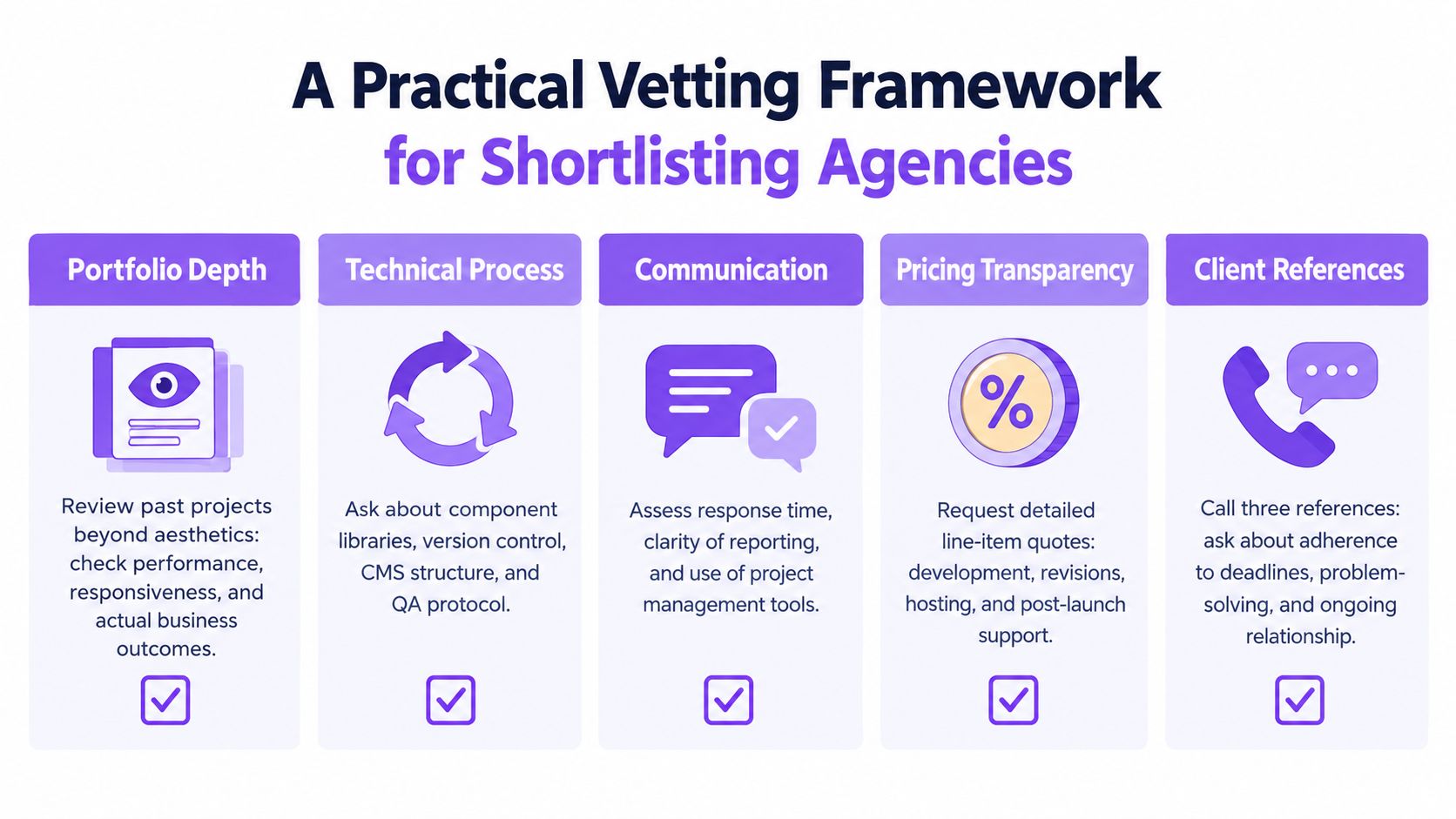
Portfolio screenshots are easy to fake. Maintainable systems are harder to hide. The shortlist should be built around how an agency thinks, how it scopes, and how it handles change after launch, because that's where most of the value shows up.
Judge the portfolio by outcomes, not visuals
A pretty homepage says almost nothing. Ask what the site had to support, how the CMS was structured, and whether the team can explain the business logic behind the build. If the portfolio only shows motion design and polished hero sections, the agency may be strong at art direction and weak at operations.
The better signal is whether case studies mention editor experience, component reuse, or migration complexity. Agencies that explain why they made certain architecture decisions usually understand the work thoroughly. Agencies that only post screenshots often don't.
Demand a technical process you can inspect
Ask the team to walk through a build in Webflow Designer. They should be able to explain their component library, naming system, version control habits, CMS schema decisions, and QA protocol without improvising. If they can't explain those things clearly, they probably won't be good when the site needs changes later.
Good agencies describe the system first, the visuals second.
Pricing transparency matters just as much. Fixed-fee work can be clean if scope is tight. Retainers make sense if the team expects ongoing updates, but the client should know how sprint capacity is defined and what falls outside the monthly bucket.
Protect the contract, not just the launch date
The contract should address IP ownership, staging access, hosting responsibilities, exit terms, and handover materials. If the agency controls everything until the final invoice clears, the client has no standing if the relationship breaks. The client should also know how revisions are handled, what counts as out-of-scope work, and how support is priced after launch.
When the shortlist gets down to two or three firms, use a simple weighting system. Give the highest weight to CMS architecture, post-launch support, and clarity of process if the site will be updated often. Give more weight to design polish only if the site is mostly static and won't need much editing.
A good shortlist is not the one with the flashiest presentation. It's the one that can still be trusted after the launch email gets sent.
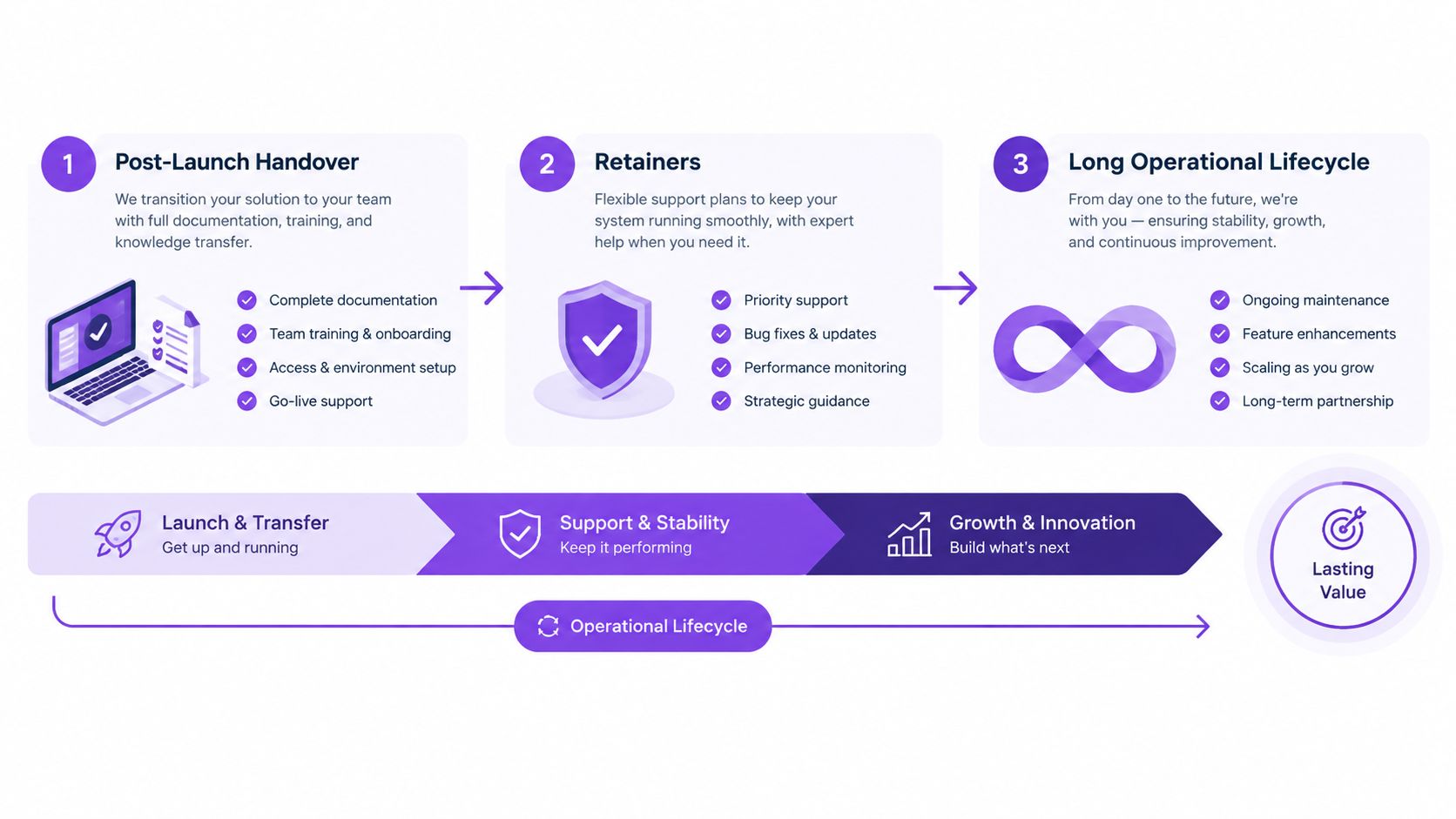
Post-Launch Handover, Retainers, and the Long Operational Lifecycle
Most agencies overvalue launch day. The launch is important, but it's not the business outcome. The site's real value shows up when editors start using it, marketers start asking for updates, and the original build has to survive contact with reality.
Handover is a deliverable, not a courtesy
A serious handover package includes a recorded walkthrough, a CMS architecture map, a style guide tied to Webflow's class system, and a documented integration inventory. It should also show how to edit content safely, where common mistakes happen, and which parts of the site are meant to stay locked down.
That matters because many teams don't need a developer for every change, they need confidence that their editors won't break the layout. A good handover creates that confidence. A weak one leaves the client guessing and eventually paying for small changes they should've been able to do themselves.
Retainers should match the type of support
Not every retainer should look the same. A break-fix arrangement makes sense when the site is stable and support needs are rare. A growth retainer fits teams shipping campaigns, testing pages, and iterating on conversion paths. An embedded team model suits organizations with a steady stream of web work and enough change volume to justify close collaboration.
The right model depends on internal capacity, not habit. If the marketing team plans to publish often, the retainer should buy speed and clarity, not just a vague promise that someone will be available. If the team only needs occasional fixes, a lighter support arrangement is cleaner.
The worst retainer is the one that sounds cheap but creates friction every time the team asks for something new.
The operational lifecycle is where post-launch governance, localization, performance oversight, and CMS evolution all come together. Buyers should evaluate agencies on whether they can support that lifecycle, not just the first release.
Red Flags, Pricing Traps, and Migration Risks to Watch For
Some agencies look fine in the pitch and become expensive once the site is underway. The warning signs are usually boring, which is why they get missed. Price by page count, unclear staging access, and hand-wavy migration talk are all signs that the project will cost more than it should.
Pricing traps hide in the details
A low entry fee can be offset by expensive add-ons later. Hidden costs often show up in animation work, extra revisions, hosting markups, or retainers that assume the client will use the full monthly allocation. If the pricing model isn't explained clearly, the agency may be pricing the relationship, not the project.
Another trap is treating page count as the main pricing driver. That misses the key cost centers, which are CMS architecture, integrations, permissions, and handover quality. A simple-looking site with hard requirements can cost more than a visually dense site with a shallow content model.
Migrations fail when the structure is ignored
Migration risk is highest when the original content structure doesn't map neatly into Webflow's collection-based CMS. WordPress, Shopify, and hard-coded sites often carry years of inconsistent URLs, field types, and content patterns. If the agency doesn't start with URL inventory and redirect mapping, the move can damage organic visibility and editorial continuity.
A migration pitch should also address schema markup, content parity, and post-launch crawl validation. If the team can't describe those pieces without drifting back to design language, they're not treating the migration like an operational project.
Pressure-test every claim
Ask for staging URLs. Ask who does the work. Ask how long common editor-side changes take. Ask how hosting, support, and ownership work if the relationship ends. And ask for references from projects that have already lived through real content changes, not just launch week.
Common Webflow Agency Red Flags and How to Pressure-Test Them | Hidden Risk | Pressure-Test Question |
|---|---|---|
Prices by page count only | Scope misses CMS and integration complexity | “How do you price CMS architecture, approvals, and integrations?” |
No staging access | Hidden work or poor process visibility | “Can stakeholders review the build before launch?” |
Undisclosed outsourcing | Quality and communication drift | “Which work is done in-house, and which work is subcontracted?” |
No CMS discussion | Editors get a brittle site | “Show the collection model and explain how non-technical users publish content.” |
Vague retainer terms | Unused hours and slow delivery | “What response times and task caps are included each month?” |
The strongest filter is simple. If an agency can't explain the operational risks of migration and maintenance, it probably hasn't solved them often enough.
Your Hiring Checklist and Final Buyer Questions
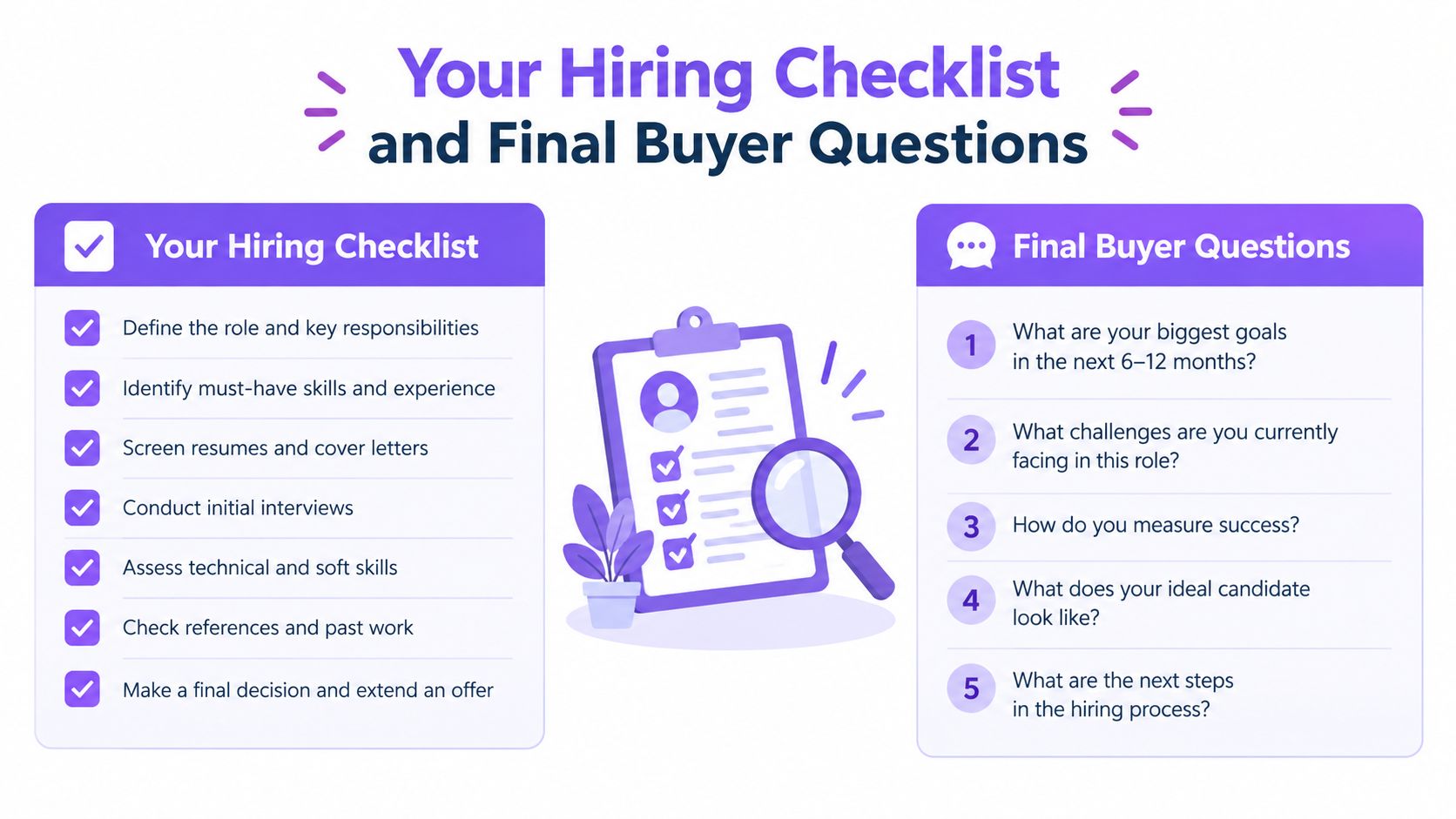
A buyer can run a shortlist in an afternoon if the checklist is tight. Start with scope, then move to the RFP, vetting, contract, and handover. The goal is not to find the fanciest presentation, it's to find the team most likely to keep the site usable after launch.
One-page hiring checklist
Scope: Define the business outcome, page types, CMS needs, integrations, and who will maintain content.
RFP: Require assumptions, exclusions, milestones, and a budget range.
Vetting: Review portfolio depth, technical process, and editor experience.
Contract: Confirm IP ownership, hosting responsibility, staging access, and support terms.
Handover: Demand documentation, training, and a clear post-launch support model.
A Webflow development agency should make those answers easy to get. If it doesn't, the buyer is looking at a launch vendor, not a long-term partner.
Bottom line: buy the team that can explain how the site will still work after the launch excitement is gone.
Buyer questions that still matter
How much should a serious build cost? As noted earlier, enterprise builds with advanced migrations and integrations are commonly priced at $30,000–$60,000+, while standard business sites with custom CMS architecture typically fall in the $8,000–$25,000 range pricing benchmark. That range only makes sense when scope is defined.
How long should the project take? The timeline should follow discovery, design, build, QA, and launch milestones. If the agency skips milestone planning, it's probably hiding uncertainty.
What happens if scope changes mid-project? Good agencies re-estimate against the changed deliverables and call out what moves in the schedule. Bad agencies bury the change inside a vague revision cycle.
Should the agency own hosting and CMS modeling? The agency should build the CMS model and explain hosting responsibilities clearly. Ownership should stay with the client.
How should a maintenance retainer be judged? By response time, sprint capacity, and whether the team can ship useful work without recurring friction.
If the shortlist still feels fuzzy, use this rule. Choose the agency that talks most clearly about content structure, handoff, and long-term support. Then ask for a contract that proves it.
If a site has to support serious marketing, migrations, and ongoing edits, don't buy the loudest portfolio. Shortlist a Webflow development agency that can show its CMS logic, handover materials, and support model in writing, then book a vendor call this week and force every candidate to quote the same scope.